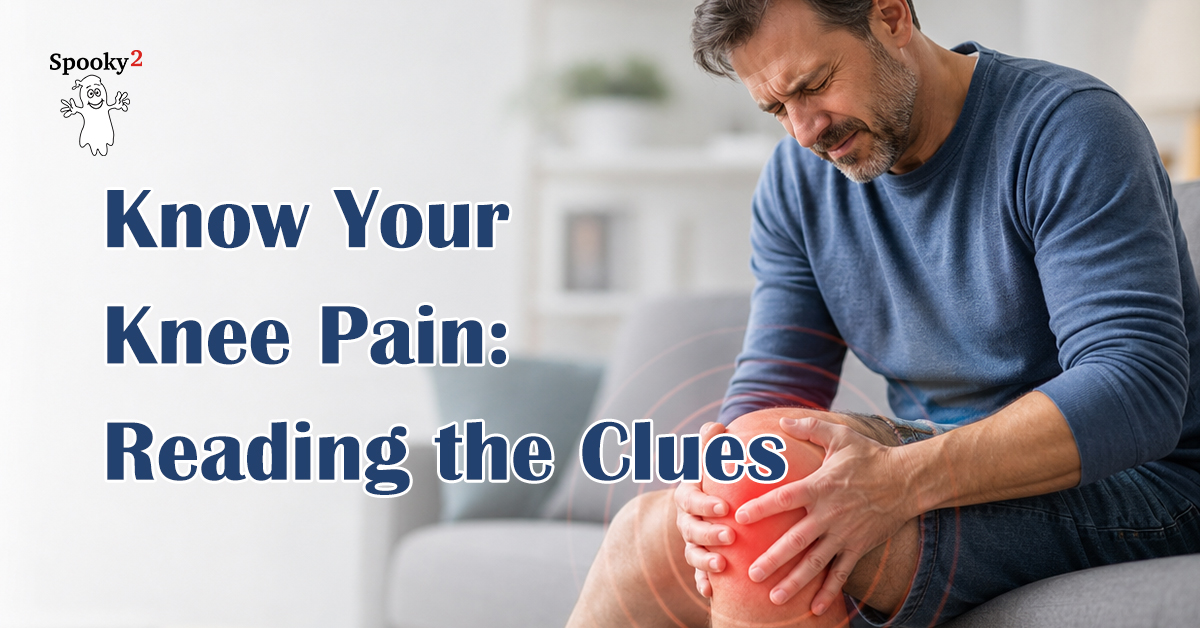
Knee pain often shows up in ordinary moments: walking upstairs, getting up from a chair, or after spending more time on your feet than usual. But have you ever stopped to notice where exactly it hurts?
The knee is more complex than it may seem. Bones, cartilage, ligaments, tendons, muscles, and small fluid-filled sacs (bursae) all work together to keep it moving smoothly. When discomfort appears, the location can offer meaningful clues about what may be going on.
Reading Your Knee Pain by Location
Knee pain can appear around or beneath the kneecap, deep within the joint, behind the knee, or along either side. Because the knee contains many closely connected structures, where the pain appears may offer clues about which tissues or conditions could be involved.
Pain Around the Kneecap
Pain around or behind the kneecap is common. You may notice it more when climbing stairs, squatting, or sitting with your knee bent for a long time.
One possible cause is patellofemoral pain, sometimes called “runner’s knee,” which affects the area where the kneecap meets the thighbone. Despite the name, it is not limited to runners. Repetitive stress, sudden increases or changes in activity, muscle weakness or imbalance, and previous injury may all play a role. If the pain is concentrated directly below the kneecap, the patellar tendon may be the source, particularly after increased activity or repeated loading of the knee.
If the pain sits just above the kneecap, the quadriceps tendon, which connects the thigh muscles to the kneecap, may be involved. Repetitive loading, overuse, or a sudden increase in activity can irritate the tendon and cause pain or tenderness in this area.
As we get older, osteoarthritis also becomes a more common cause of knee discomfort, particularly from middle age onward. It usually develops gradually and may cause aching, stiffness, or reduced ease of movement.
Pain on the Inside of the Knee
The medial meniscus, a piece of cartilage that helps cushion and stabilize the joint, is one possible source of inner knee pain. Meniscus problems do not always follow a dramatic injury. As the meniscus becomes more vulnerable to age-related changes, discomfort may develop gradually or appear after an ordinary twist or turn.
The medial collateral ligament (MCL) runs along the inner side of the knee as well. Pain from an MCL injury, however, is more often associated with a force or movement that pushes the knee inward.
Osteoarthritis can also affect the inner part of the knee, often causing aching or stiffness during walking and standing, or after periods of rest.
Pain on the Outside of the Knee
Outer knee pain may be linked to the iliotibial band, or IT band, which runs along the outside of the thigh. It can become irritated during repetitive activity. Running is a common trigger, but other activities such as long walks or cycling can also contribute.
The lateral meniscus and the lateral collateral ligament (LCL) can also cause pain in this area, particularly after twisting or injury.
Pain Behind the Knee
One possible cause of pain behind the knee is a Baker’s cyst, a fluid-filled swelling that can form when excess joint fluid collects at the back of the knee. It may feel like tightness or pressure, and you may also notice a lump or swelling in the area. Baker’s cysts are often associated with underlying knee problems such as arthritis or a meniscus tear.
The hamstrings and calf muscles also attach near the back of the knee, so strain or tightness in these tissues can sometimes feel like pain coming from the joint itself.
Sometimes the Activity Tells You More
Location is only part of the story. When the pain appears and what you were doing at the time can offer additional clues.
Pain that begins after a sudden twist may involve the meniscus or ligaments, while discomfort that gradually builds during a long walk may be associated with repeated loading of the knee. For many people over 35, symptoms can also appear after a change in routine, such as starting a new workout, walking farther than usual, spending several hours gardening, or returning to exercise after a break.
In older adults, a knee that suddenly becomes very painful, swollen, warm, and difficult to move may be related to an acute CPPD flare, sometimes called pseudogout. CPPD commonly affects the knee, and the likelihood of developing it increases with age. A flare can last for days or weeks, and some people with CPPD may develop more persistent arthritis-like joint pain or stiffness over time.
Simple Ways to Care for Your Knees
Your knee is a complex system, but caring for it doesn’t have to be complicated. A few everyday habits can help reduce unnecessary strain and keep your knees moving comfortably.
Keep Moving Regularly
Walking, cycling, swimming, and other low-impact activities can help maintain mobility and are generally easier on the knees than sudden, high-impact exercise. Before exercising, take a few minutes to warm up gradually with gentle movement. A proper warm-up helps prepare your muscles and joints for activity and may reduce the risk of strains and other injuries.
Build Strength Gradually
Strong muscles around the thighs and hips help support the knee and manage some of the forces placed on the joint. Increase exercise intensity gradually, especially after a period of inactivity.
Choose Comfortable Footwear
Well-fitting shoes suited to your activity can improve comfort and provide extra support, particularly during longer periods of walking or standing.
Allow Time for Recovery
If an activity repeatedly causes pain or soreness, reduce the intensity or take a break rather than pushing through it. Give your knees time to adjust when increasing your activity level.
Use Heat or Cold When Appropriate
A cold pack wrapped in a towel may help with temporary soreness or swelling after activity, while gentle warmth may provide temporary relief when stiffness is the main concern. Avoid applying ice directly to the skin, and limit cold applications to about 20 minutes at a time.
Know When to Seek Professional Advice
The most useful clues come from looking at the whole picture: where the pain is, when it appears, how it started, and whether there is swelling, stiffness, or weakness. Understanding these patterns can help you make better sense of what your knee may be telling you.
Reading the clues behind your knee pain is one thing. Knowing when to seek professional advice is just as important. Do not delay medical evaluation if the knee becomes very swollen, red, or hot, if you cannot put weight on it, or if you cannot fully bend or straighten it. Severe pain after an injury, obvious deformity, sudden unexplained changes or discomfort, or discomfort that keeps returning and begins to interfere with daily life should also be assessed.