

Sleep shouldn’t feel like a nightly negotiation. Whether you’re tossing and turning, waking at every sound, or dealing with disruptive loud sleep, Spooky2 can help. In this article, we’ll explore key sleep frequencies in the Spooky2 software and the recommended hardware setups to help you tune into a good night’s rest.
Frequencies for Falling and Staying Asleep
Main Database Programs
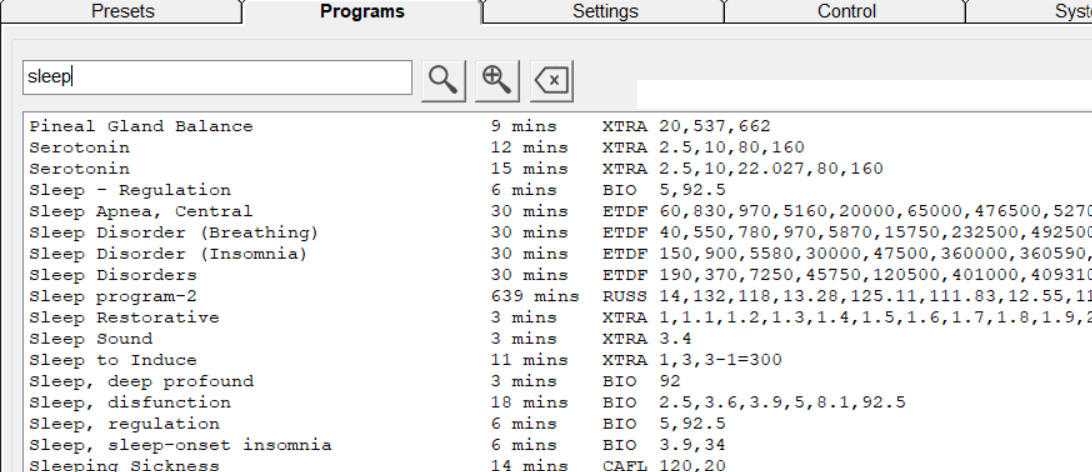
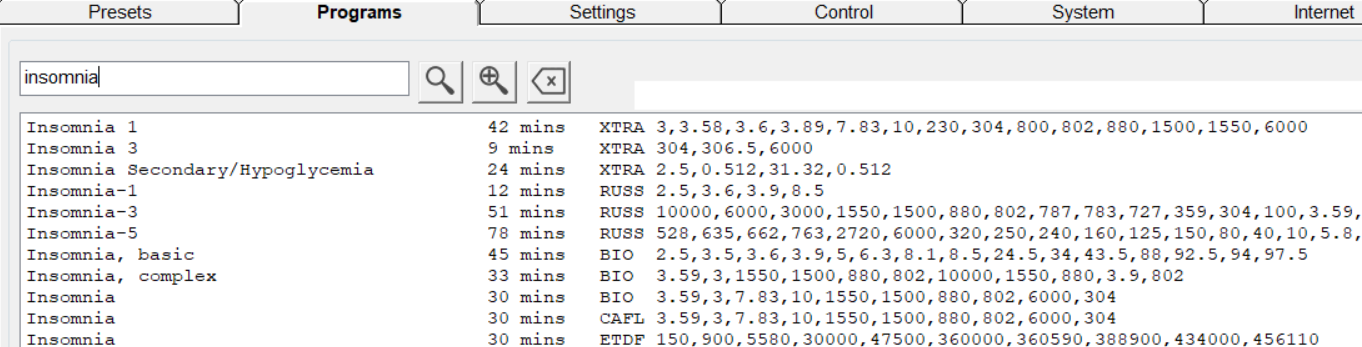
While everyone’s path to better sleep is different, several time-tested programs are well worth exploring. You can easily find a wide selection of options in the main database by searching keywords like “sleep” or “insomnia” under the Programs tab. For best results, run these with a Healing shell preset, starting 30–60 minutes before you head to bed. Some of the key programs include
- Sleep to Induce (XTRA): 1, 3, 3-1
- Insomnia 1 (XTRA): 3, 3.58, 3. 6, 3. 89, 7. 83, 10, 230, 304, 800, 802, 880, 1500, 1550, 6000
- Insomnia 3 (XTRA): 304, 306.5, 6000
- Pineal Gland Balance (XTRA): 20, 537, 662
From a brainwave perspective, you can also try delta wave programs such as Delta Rhythm-for sleeping (RUSS) to support deep relaxation and restful states.
Presets
Most of us tend to search in the JW Peptides collection first. Great starting points include Insomnia or Chronic Sleeplessness (Unable to Sleep), which work best when run in Remote or Scalar mode.
There are also other presets that help address sleep issues from different perspectives. For example, many users have reported positive shifts using the DH Experiemental Frequencies. Relevant DH presets include 0011 Sleep Frequencies and 0408 Deep Sleep. You can read more about DH frequencies here.
For more comprehensive approaches, you can use Sleep Induction (R) – DB, Sleep and Insomnia (R) – DB, or Daily Wellness (R) – BY.
Frequencies for Loud Sleep
Snoring—or “loud sleep”—is about more than just noise; it may indicate more complex issues such as sleep apnea, where the airways cannot maintain optimal openess during sleep. Restricted airflow forces your body to work harder to breathe, fragmenting your rest and leaving you exhausted the next morning.
Main Database Programs
Key main database frequency programs include
- Sleep Disorder (Breathing) (ETDF): 40, 550, 780, 970, 5870, 15750, 232500, 492500, 826070, 925950
- Central Sleep Apnea (ETDF): 60, 830, 970, 5160, 20000, 65000, 476500, 527000, 742000, 987230
- Snore (BIO): 28.5, 80.5, 83.5, 98.5
Note that it is equally important to address any primary causes of obstructed airways, such as enlarged turbinates.
Presets
You can find relevant presets to help with your loud sleep in the JW Peptides collection and the DH Experimental collection. Peptide program Sleep Apnea and DH preset 0025 Obstructive Sleep Apnoea are both good starting places. Combining frequency programs with some lifestyle adjustments may further optimize the results, such as adopting pillows that promote side sleeping or elevate the upper body.
Recommended Setups
Since sleep programs often run overnight and require consistent use, Remote mode becomes an ideal option. By using a biological sample instead of tethering yourself to wires, you can enjoy uninterrupted rest effortlessly. You can also imprint stickers with your chosen programs for portable support (read more here).
Spooky2 Scalar adds yet an extra layer of comfort. Simply set up the transmitter and receiver on opposite sides of your bed to enjoy seamless scalar support through the night.
-
All Product, Beginner Frequency Healing Rife Machine Kits, Frequency Healing Rife Machine Kits, Spooky2 GeneratorX Pro Frequency Healing Rife Machine Kits, Spooky2 New User Kits, Spooky2 Portable Kits
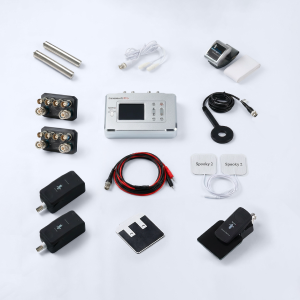
Spooky2 Portable GeneratorX Pro Essential Kit
 All Product, Beginner Frequency Healing Rife Machine Kits, Frequency Healing Rife Machine Kits, Spooky2 GeneratorX Pro Frequency Healing Rife Machine Kits, Spooky2 New User Kits, Spooky2 Portable Kits
Spooky2 Portable GeneratorX Pro Essential Kit
GeneratorX Pro (GX Pro) is the world’s most powerful Rife generator, brimming with advanced features.
Each GX Pro contains 2 function generators, which is a total of 4 frequency outputs plus a full Biofeedback system.
GX Pro can run at 40 MHz with any waveform, and can also load up to 30 programs from Spooky2 software. The most important feature of the GX Pro is its ability to run standalone without needing to stay connected to a computer. Simply load the programs onto the device using a computer, and it will continue to operate independently.
If you need help with acute problems, chronic problems, or serious problems, the Spooky2 Portable GeneratorX Pro Essential Kit will be the best way to start.
Note:
- At Spooky2, we are always trying our best to protect our environment. We have updated our kit packaging to a more sustainable portable case.
- The Spooky2 software requires Windows.
Access Free Spooky2 Courses and Certified Trainer Services
Gentle yet Effective Energy Support
Begin your body energy balancing journey with Spooky2 today. Experience a holistic approach designed to support your body’s natural alignment. With our 30-day satisfaction guarantee, you can get started with total confidence.Information:
How to Use Spooky2 Portable GeneratorX Pro Essential Kit
Spooky2 Video Tutorial
Spooky2 GeneratorX Pro User’s Guide
How to Do GX Pro TENS Scan
The Differences Between GX Pro and the XM GeneratorSKU: SP-1B30S-15 -
All Product, Frequency Healing Rife Machine Kits, Frequency Healing Rife Machine Upgrade Kits, Spooky2 GeneratorX Pro Frequency Healing Rife Machine Kits, Spooky2 Portable Kits
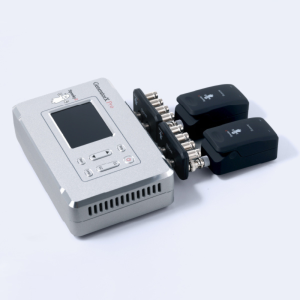
Spooky2 Portable GeneratorX Pro Remote Kit
 All Product, Frequency Healing Rife Machine Kits, Frequency Healing Rife Machine Upgrade Kits, Spooky2 GeneratorX Pro Frequency Healing Rife Machine Kits, Spooky2 Portable Kits
Spooky2 Portable GeneratorX Pro Remote Kit
GeneratorX Pro(GX Pro) is the world’s most powerful Rife generator, brimming with the most advanced features. It is more advanced than our original Spooky2 XM Generator.
Each GX Pro contains 2 function generators, which is a total of 4 frequency outputs plus a full Biofeedback system.
GX Pro can run at 40 MHz with any waveform, and can also load up to 30 programs from Spooky2 software. The most important feature of the GX Pro is its ability to run standalone without needing to stay connected to a computer. Simply load the programs onto the device using a computer, and it will continue to operate independently.
Note:
- At Spooky2, we are always trying our best to protect our environment. We have updated our kit packaging to a more sustainable portable case.
- The Spooky2 software requires Windows.
Access Free Spooky2 Courses and Certified Trainer Services
Gentle yet Effective Energy Support
Begin your body energy balancing journey with Spooky2 today. Experience a holistic approach designed to support your body’s natural alignment. With our 30-day satisfaction guarantee, you can get started with total confidence.Information:
How to Use Spooky2 Portable GeneratorX Pro Remote Kit
Spooky2 GeneratorX Pro User’s Guide
Spooky2 GeneratorX Pro Q&A
How to Do GX Pro TENS Scan
The Differences Between GX Pro and the XM GeneratorSKU: SP-1B21S-11 -
All Product, Beginner Frequency Healing Rife Machine Kits, Frequency Healing Rife Machine Kits, Spooky2 Scalar Energy Healing Kits
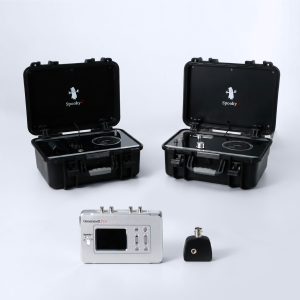
Spooky2 Scalar GeneratorX Pro Essential Kit
 All Product, Beginner Frequency Healing Rife Machine Kits, Frequency Healing Rife Machine Kits, Spooky2 Scalar Energy Healing Kits
Spooky2 Scalar GeneratorX Pro Essential Kit
Spooky2 Scalar GX Pro Essential Kit provides a full scalar system for healing scalar energy and scalar biofeedback scans.
Want to know if Spooky2 Scalar really works for you? View our verified testimonials here.
Access Free Spooky2 Courses and Certified Trainer Services
Gentle yet Effective Energy Support
Begin your body energy balancing journey with Spooky2 today. Experience a holistic approach designed to support your body’s natural alignment. With our 30-day satisfaction guarantee, you can get started with total confidence.SKU: n/a
Real Results From Real Users

Source: https://www.facebook.com/groups/spooky2/permalink/3550209131807631/

Source: https://www.facebook.com/groups/spooky2/permalink/3022586717903211/
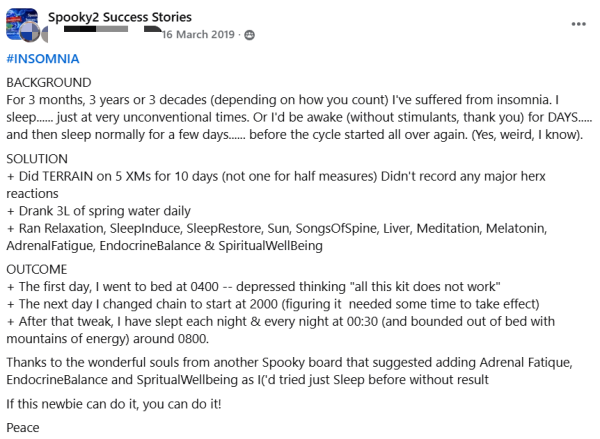
Source: https://www.facebook.com/groups/spooky2success/posts/1111110082409938

Thanks for this absolutely wonderful information. I am new to Spooky2 and this info is a wonderful gift.
I have dealt with insomnia for over 30 years and I also have been diagnosed with sleep apnea. I will try this out.
Thanks for all you do and are for everyone looking to alter their health and lives.
Hi Michele! Thank you for your support! All good wishes for your Rife wellness journey 🙂
Hey, suggestion: Try the snore & nose snoring on the GX only. It seems to have cured my sleep apnea for good!
Hi Hirad, thank you for sharing your valuable experience! We’re so glad to hear that our programs have been helpful. Snoring and Nose Snoring are both excellent suggestions!