
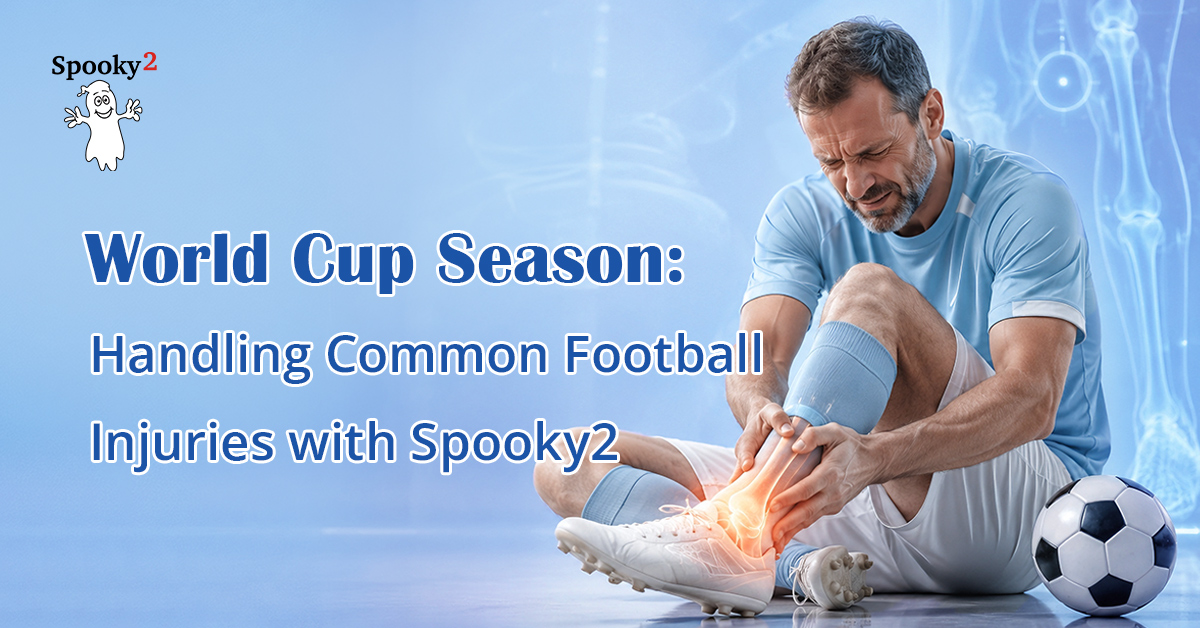
The excitement of the World Cup season is in the air! Many of us are hitting the pitch with the vibe. But the high-intensity sprinting, sharp pivoting, and physical contact come often with a toll: injuries. From sudden ankle sprains to devastating ACL tears, a single football injury can sideline you for months. In this article, let’s discover how Spooky2 may help you get off the bench and back into the game.
Common Football Injuries and Spooky2 Solutions
As the football sport relies on continuous running, sudden acceleration/deceleration, and sharp cutting maneuvers, a large majority of all football injuries occur in the lower extremities. While proper warm-ups and aftercare play a preventative role, there are things you can do when these injuries do happen.
Ligament Sprains & Tears
Football players are required to rapidly change direction while running at high speeds, which puts immense torque on the joints.
Lateral Ankle Sprains: It typically happens when a player rolls their ankle while stepping on an uneven patch of grass, executing a quick cut, or landing after physical contact. Spooky2 peptide collection offers targeted programs such as Sprain Healing and Ankle (Unstable Weak). You can also use main database programs like Ligament and Muscle Strain and Sprains (RUSS) with a Healing shell.
ACL (Anterior Cruciate Ligament) Tears: This is one of the most severe injuries on the pitch. It frequently happens without contact—a player tries to stop or change direction quickly, and the knee ligament withstands a sudden burst of torque. Statistically, female football players are 4 to 6 times more likely to suffer a non-contact ACL tear than male players. This is due to variations in anatomy (a wider pelvis creating a sharper angle at the knee), biomechanics, and hormonal differences that affect ligament laxity. Spooky2 peptide programs Regeneration (Nerves, Tissues, Ligaments, Bone, Muscle) and Ligament Repair, main database programs Ligament Stimulate Healing (XTRA) and Knee Injury (ETDF) may help with this concern.
Meniscus Tears: Similar to ACL tears, this cartilage cushioning the knee joint can easily tear when a player twists their knee forcefully while their foot is firmly planted in the grass. For this specific injury, available peptide programs include Meniscus Tear (Knee) and Cartilage Repair and Regeneration, and main database programs include Meniscus Tear (ETDF) and Knee Injury (ETDF).
Muscle Strains
90 minutes (or more) of running in a match or intensive training sessions make such soft-tissue injuries incredibly frequent.
Hamstring Strains: Usually occuring during high-speed dashes or sprints, it may first appear as a cramp, and develop into a real strain if left ignored. Aside from stretching, ice baths and sports massage, you can combine Spooky2 programs such as Pulled Hamstring (peptide program), and Injuries (Groin Pull, Knee, Hamstring, Hip Flexor strain RDPV3 Group 21) (ETDF).
Groin (Adductor) Strains: The inner thigh muscles are under constant stress from the repetitive, explosive twisting motion required to pass, clear, or shoot the ball. Aside from the above ETDF program, you can use other muscle-related programs like Muscular Pain and Injury (CAFL), or the peptide program Pulled Groin.
Overuse & Traumatic Contact Injuries
Shin Splints: Shin splints is characterized by the dull, aching pain on the front or inside of the shin. For footballers, they are usually caused by a sudden spike in running, playing on hard artificial turf, or tight calves. When you experience shin splints, you can use the peptide program Bone Pain, or main database programs such as Periosteum (RUSS), Disease of Bone and Periosteum (BIO), Injuries (Patellofemoral, Sciatica, Shin Splints, RDPV3 Group 21) (ETDF).
Concussions: A “header”, colliding heads with another player or taking a stray elbow in physical contests, or falling on the head can all cause concussions. When it happens, peptide programs Concussion and Post-Concussion Syndrome (PCS), and the main database program Brain Concussion (ETDF/KHZ) may provide the extra frequency support you need.
Recommended Modes
Spooky2 ecosystem offers a wide range of options to cater for your unique needs. Contact mode allows for direct frequency application via contact accessories. For example, you can stick a pair of TENS pads near your concerned area or wear a leg band (from the TENS contact kit) on your thigh, knee, or calf. (Read more on how to apply Contact accessories here)
PEMF mode utilizes the pulsed electromagnetic field, which is ideal for promoting deep relaxation and self-recovery. PEMF coil can be used on your head, neck, or other areas of your choice. You can also combine Remote mode or Spooky2 Scalar to further optimize your plan without being tethered to a machine.
-
Contact Accessories for Rife Machines, Rife Machine Accessories
Spooky2 Tens Contact Kit
This is a kit to bring you more convenience and flexibility when doing Spooky2 Contact sessions.
Spooky2 TENS Contact Kit contains silver-impregnated gloves, socks, and stretchable bands, which can be worn easily during long sessions.
Simply connect these accessories to the High Power port of your Spooky2 Boost and enjoy the energy-balancing frequencies.
Spooky2 TENS cable needed to connect the contact kit to the generator can be ordered here.
 SKU: n/a
 -
-
All Product, Beginner Frequency Healing Rife Machine Kits, Frequency Healing Rife Machine Kits, Spooky2 GeneratorX Pro Frequency Healing Rife Machine Kits, Spooky2 New User Kits, Spooky2 Portable Kits
Spooky2 Portable GeneratorX Pro Essential Kit
 All Product, Beginner Frequency Healing Rife Machine Kits, Frequency Healing Rife Machine Kits, Spooky2 GeneratorX Pro Frequency Healing Rife Machine Kits, Spooky2 New User Kits, Spooky2 Portable Kits
Spooky2 Portable GeneratorX Pro Essential Kit
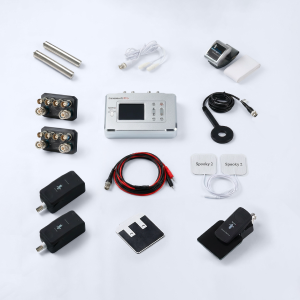
GeneratorX Pro (GX Pro) is the world’s most powerful Rife generator, brimming with advanced features.
Each GX Pro contains 2 function generators, which is a total of 4 frequency outputs plus a full Biofeedback system.
GX Pro can run at 40 MHz with any waveform, and can also load up to 30 programs from Spooky2 software. The most important feature of the GX Pro is its ability to run standalone without needing to stay connected to a computer. Simply load the programs onto the device using a computer, and it will continue to operate independently.
If you need help with acute problems, chronic problems, or serious problems, the Spooky2 Portable GeneratorX Pro Essential Kit will be the best way to start.
Note:
- At Spooky2, we are always trying our best to protect our environment. We have updated our kit packaging to a more sustainable portable case.
- The Spooky2 software requires Windows.
Access Free Spooky2 Courses and Certified Trainer Services
Gentle yet Effective Energy Support
Begin your body energy balancing journey with Spooky2 today. Experience a holistic approach designed to support your body’s natural alignment. With our 30-day satisfaction guarantee, you can get started with total confidence.Information:
How to Use Spooky2 Portable GeneratorX Pro Essential Kit
Spooky2 Video Tutorial
Spooky2 GeneratorX Pro User’s Guide
How to Do GX Pro TENS Scan
The Differences Between GX Pro and the XM GeneratorSKU: SP-1B30S-15 -
All Product, Beginner Frequency Healing Rife Machine Kits, Frequency Healing Rife Machine Kits, Spooky2 Scalar Energy Healing Kits
Spooky2 Scalar GeneratorX Pro Essential Kit
 All Product, Beginner Frequency Healing Rife Machine Kits, Frequency Healing Rife Machine Kits, Spooky2 Scalar Energy Healing Kits
Spooky2 Scalar GeneratorX Pro Essential Kit
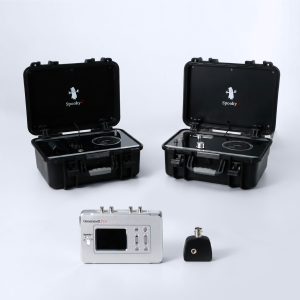
Spooky2 Scalar GX Pro Essential Kit provides a full scalar system for healing scalar energy and scalar biofeedback scans.
Want to know if Spooky2 Scalar really works for you? View our verified testimonials here.
Access Free Spooky2 Courses and Certified Trainer Services
Gentle yet Effective Energy Support
Begin your body energy balancing journey with Spooky2 today. Experience a holistic approach designed to support your body’s natural alignment. With our 30-day satisfaction guarantee, you can get started with total confidence.SKU: n/a

Real Results from Real Users
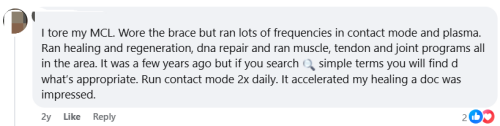
Source: https://www.facebook.com/groups/spooky2/permalink/2650919875069899/
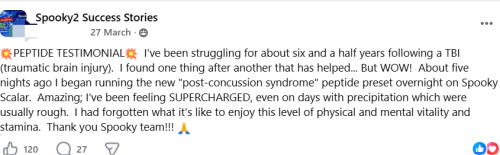
Source: https://www.facebook.com/groups/spooky2success/permalink/3264871043700487/