
If you or a loved one are living with Postural Orthostatic Tachycardia Syndrome (POTS), standing up isn’t just a simple physical action—it can feel like a sudden, chaotic storm inside the body. Too often, POTS symptoms are dismissed as simple anxiety or stress. In reality, POTS is a complex form of dysautonomia, a malfunction of the autonomic nervous system.
In this post, we are breaking down the causes and symptoms of POTS, and how Spooky2 frequency programs can help support your body’s journey back to balance.
Common Symptoms of POTS
Normally, gravity pulls blood downward to your abdomen and legs when you stand up. Your autonomic nervous system (ANS) instantly responds by tightening your blood vessels and slightly increasing your heart rate to ensure a steady supply of oxygen-rich blood reaches your brain.
In someone with POTS, this automated system misfires. The blood vessels fail to constrict efficiently, causing blood to pool in the lower body. To compensate for the lack of blood returning to the heart and brain, the heart is forced to beat excessively fast just to maintain circulation. POTS is therefore characterized by these symptoms:
Severe Tachycardia: A racing heart rate that jumps by 30+ bpm within minutes of standing.
Acrocyanosis: Feet and lower legs turning purple, red, or mottled due to blood pooling.
Neurological Distress: Severe brain fog, lightheadedness, and chronic fatigue.
Gastrointestinal Issues: Nausea, bloating, gastroparesis (delayed stomach emptying), and severe digestive swings.
Adrenaline Surges: Sudden episodes of jitters, tremors, cold sweats, and a pounding chest, even while resting.
Causes and Targeted Spooky2 Solutions
Spooky2 offers a general JW Peptide program against POTS which covers main therapeutic axes: Postural Orthostatic Tachycardia Syndrome (POTS).
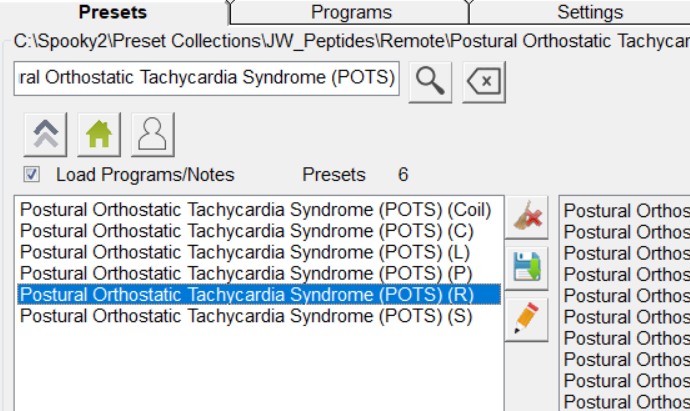
To manage POTS more effectively, it is as vital to understand why the autonomic nervous system is misfiring. POTS is highly variable, and it is usually driven by one or a combination of the core root causes.
Neuropathic POTS (Small Fiber Neuropathy)
In roughly half of the cases, POTS is driven by small fiber neuropathy. This means the tiny nerve fibers responsible for telling the blood vessels in your legs and abdomen to tighten have become damaged. When you stand, these vessels stay relaxed, causing blood to pool heavily in your lower body. Your heart is forced to race as a compensatory mechanism to push that pooled blood back up to your brain. In the JW Peptide library, available programs for this condition include Small Fiber Neuropathy, Peripheral Autonomic Neuropathy, and Vegetative Dystonia.
Hyperadrenergic POTS (The Adrenaline Surge)
This subtype looks and feels like a massive adrenaline rush. When standing, the body overproduces the stress hormone norepinephrine. This triggers a sharp spike in both heart rate and blood pressure, leaving the individual in a chronic state of physical fight-or-flight. For this condition, you can use the Adrenal Gland Balance peptide program or the Adrenal Gland Balance (XTRA) program in the main database.
Hypovolemic POTS (Low Blood Volume)
Many people with POTS simply do not have enough total blood circulating in their bodies. With less fluid circulating in the system, the heart has to pump much faster to maintain adequate blood pressure and oxygen delivery to the brain when upright. In many POTS cases, individuals have abnormally low levels of aldosterone to fix the fluid deficit. To address this, you can also use the Adrenal Gland Balance peptide program or the Adrenal Gland Balance (XTRA) program in the main database to help regulate your adrenal function. Main database programs such as Hypovolemic Shock (ETDF), Blood Flow and Circulation (BIO), and Aldosterone (MW/RRMD) can give you extra support when hypovolemic stress becomes your primary concern.
The Parasympathetic Failure
Your nervous system relies on a balance between the sympathetic (“fight-or-flight”) and parasympathetic (“rest-and-digest”) systems. The parasympathetic system acts as the primary brake to keep your heart rate calm. In POTS cases, since there isn’t a properly functioning brake to slow the heart down or signal the gut to digest food, the heart races unchecked and the digestive tract stalls.
Spooky2 offers different approaches towards this. You can use peptide programs such as Vagus Nerve Stimulation, Parasympathetic Nervous System Activation, Gastroparesis and Tachycardia, or DH presets such as 0245 Sympathetic and Parasympathetic Nervous System Correction and Balance and 0120 Vagus Nerve Balance and Regeneration Frequencies. Alternatively, you can try main database programs like Parasympathetic Nervous System Diseases (ETDF), Gastroparesis (ETDF), and Tachycardia (ETDF).
Common Secondary Causes and Co-occurring Conditions
POTS is frequently a secondary condition.
Hypermobile Ehlers-Danlos Syndrome (hEDS): This is a genetic connective tissue disorder characterized by loose joints and fragile tissues. Because the blood vessels of individuals with hEDS are unusually stretchy and compliant, they expand easily under gravitational pressure, worsening blood pooling. You can use the Ehlers-Danlos Syndrome peptide program or Ehlers-Danlos Syndrome (ETDF) for targeted support.
Mast Cell Activation Syndrome (MCAS): MCAS frequently co-occurs with POTS and hypermobile Ehlers-Danlos Syndrome (hEDS). It causes oversensitive immune cells (mast cells) to inappropriately flood the body with histamine and other inflammatory chemicals, triggering POTS symptoms like severe dizziness, heart rate spikes, and crushing fatigue. Managing MCAS helps calm this chain reaction, leading to much better symptom stability. You can use the Mast Cell Activation Syndrome (MCAS) peptide program or Mast Cell Activation Syndrome (MCAS) (ETDF) for targeted support.
Autoimmune Diseases: A significant percentage of POTS cases have an autoimmune origin, where the immune system mistakenly attacks the body’s own nerve receptors. You can use frequency programs such as Autoimmune Neuropathy (RUSS) from the main database, or peptide programs for corresponding autoimmune conditions. For more systematized approach, we recommend tackling autoimmune conditions with the M&L (Graded) Protocol. To get more information about the graded protocol, please read here.
Daily Tips for Calmer POTS
Living with POTS often involves managing symptoms day by day. While each person’s experience is unique, many people find the following strategies helpful for keeping the symptoms tamed.
Stay Well Hydrated
Adequate fluid intake is one of the basic lifestyle approaches for POTS. Drinking water consistently throughout the day may help support circulation and cardiovascular function, and increase overall blood volume. It is often recommended to combine electrolytes to help balance the system.
One thing many may ignore is to hydrate before your feet hit the floor. Mornings are often the hardest time for POTS. Giving your blood volume an immediate boost first thing in the morning can effectively reduce the early-morning dizziness and spikes in heart rate.
Swap Large Meals for Small Ones
Eating a heavy meal forces your body to redirect a massive amount of blood down to your digestive tract to process the food. Eating small, frequent meals throughout the day instead, and keeping them relatively low in simple carbohydrates helps prevent post-meal crashes, severe fatigue, and tachycardia.
Identify Personal Triggers
Keeping a symptom journal can help identify factors that contribute to flare-ups, such as heat exposure, dehydration, prolonged standing, stress, lack of sleep, or specific foods. For example, if prolonged standing is your main trigger, you can try the muscle pump practice during breaks or wear compression garments.
Practice the 4-7-8 Parasympathetic Brake
When an adrenaline surge hits, you can use your breath to manually force your parasympathetic “brakes” back online. Try diaphragmatic breathing using the 4-7-8 method: inhale through your nose for 4 seconds, hold for 7 seconds, and exhale slowly through your mouth for 8 seconds. Making your exhale twice as long as your inhale directly stimulates the vagus nerve, calming a racing heart.
Real Results from Real Users
You’re never navigating POTS alone. Many users in our community have experienced positive transitions with the help of Spooky2.
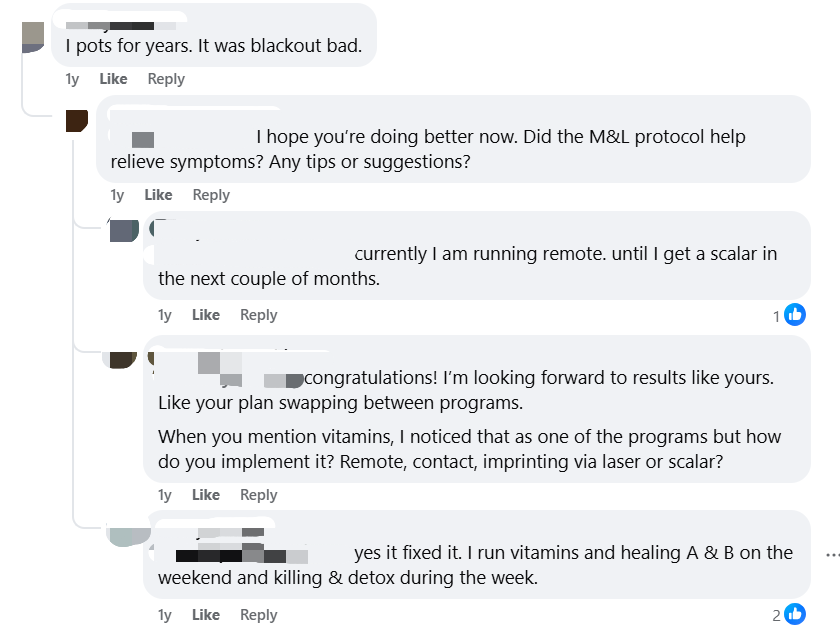
(Source: https://www.facebook.com/groups/spooky2lyme/permalink/2879988382149952/)
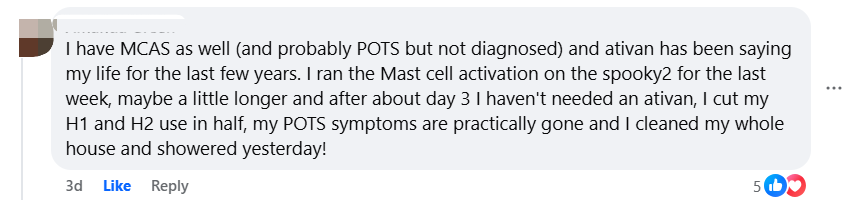
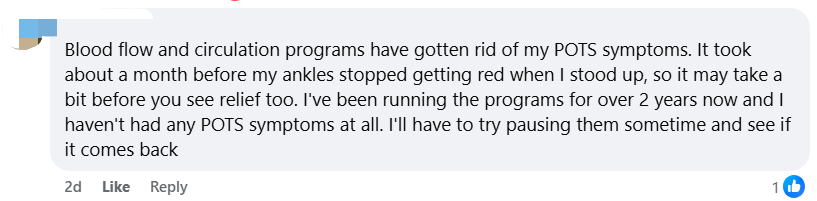
(Source: https://www.facebook.com/groups/spooky2/permalink/3512967238865154/)